
4X
Companies that align their security with their modernization efforts are 4x more likely to reach advanced AI maturity.
Source: Cloudflare
Legacy IT modernization appears on nearly every board’s technology roadmap. However, the cost of it can appear differently from every executive’s seat.
What are C-suites seeing in legacy IT modernization
- The CTO sees engineering capacity absorbed by maintenance.
- The CFO sees unpredictable spending with no clear endpoint.
- The COO sees critical operations relying on systems that become harder to support each year.
Each perspective is valid, but none captures the full cost alone. An IT system can appear technically stable, financially manageable, or operationally essential from one executive’s perspective while creating significant cost or risk for another.
That fragmented view makes modernization easier to fall out-of-track, even as the organization becomes more dependent on the system and less capable of changing it.
This article examines six pain points that reveal where the modernization costs land for each C-executives and why a single legacy system can create competing business priorities.
What Is Legacy IT Modernization?
Legacy IT Modernization
Legacy IT modernization is the strategic process of updating, replacing, or restructuring aging software systems, infrastructure, and applications so they can meet current and future business demands.
The term “legacy” does not simply mean old. An application becomes legacy when its technology or architecture prevents the business from changing safely, predictably, or economically. A system can still be functional and create significant constraints if it lacks reliable documentation, cannot integrate with modern platforms, or creates unacceptable security risks.
The AI era raises the stakes considerably. Most legacy systems predate cloud native architecture, real time processing, and unstructured data at scale, so they were never built to support today’s AI workloads.
Conclusion
Legacy IT modernization has become a prerequisite for any meaningful AI strategy.
Legacy IT modernization & Application Modernization
Legacy IT modernization addresses the broader transformation of an organization’s technology environment, including applications, infrastructure, data platforms, security, and operating models. Within this broader initiative, application modernization focuses specifically on transforming legacy software through approaches such as rehosting, replatforming, refactoring, rearchitecting, rebuilding, or replacing applications.
Why Modernization Creates Different Executive Priorities
Executives may agree that legacy systems need attention while still disagreeing on urgency, funding, and sequencing. The disagreement usually comes from the way each function experiences cost.
| Executive | Primary concern | Core question |
| CTO or CIO | Delivery capacity and technology risk | How much is legacy technology limiting our ability to change? |
| CFO | Cost predictability and investment value | How much are we spending, and when will modernization reduce that cost? |
| COO | Business continuity and operational reliability | How much operational risk are these systems creating? |
Every legacy challenge affects all three roles, but one executive typically bears the cost most directly. Making that ownership clear helps organizations build a stronger business case for legacy IT modernization projects.
The following six modernization pain points show where those costs land and which executive primarily owns the exposure.
Bandwidth Bottlenecks
Legacy systems often consume the people best qualified to move the business forward.
Modernization work often requires senior engineers, architects, and platform leaders as they understand the system’s history, exceptions, and hidden dependencies. Their expertise makes them effective at resolving incidents, but repeated modernization work removes them from more strategic development priorities.
Every modernization cycle carries an opportunity cost, and it compounds steadily over time. As that tradeoff continues, the cost is therefore greater than the hours spent resolving incidents.
How this challenge affects C-suites
- The CTO owns the immediate delivery cost. Engineering capacity is absorbed by maintenance, technical debt, and recurring incidents, leaving less time for innovation and delaying the technology roadmap.
- The CFO sees lower returns from technology spending because highly compensated engineers are maintaining existing systems instead of building capabilities that support growth or efficiency.
- The COO experiences the downstream effects through slower process improvements, delayed system enhancements, and longer response times when operational needs change.
Resource Competition
Legacy IT modernization and BAU (Business As Usual) work often compete for the same limited pool of funding, talent, and leadership attention.
The competition can become self-reinforcing. When urgent maintenance takes priority, modernization milestones slip. As modernization slips, the organization must continue funding the legacy system for longer.
What appears to be a short-term allocation decision can therefore extend the total cost and duration of the transformation.
How this challenge affects C-suites
- For CTO: The CTO must divide engineering talent between maintaining business continuity and delivering modernization initiatives. Progress in one area often comes at the expense of the other.
- For CFO: The CFO must fund both current operations and future transformation without a clear point at which legacy costs will decline. Delays can prolong duplicate spending and weaken the modernization business case.
- For COO: The COO must balance the need for operational stability against the disruption required to introduce new systems, workflows, and responsibilities.
Cost Variance
Legacy systems rarely have a stable cost profile.
Routine modernization may appear manageable, but unsupported technologies, specialist vendors, security requirements, emergency fixes, and aging infrastructure can cause spending to rise without warning.
These expenses are also difficult to forecast because they are often triggered by incidents rather than planned improvements. As a result, the team may not be able to predict what the system will require next year, limiting budget planning and financial control.
How this challenge affects C-suites
- For CFO: The CFO owns the direct financial exposure. Unplanned support costs, specialist rates, and emergency spending make budgets less predictable and reduce confidence in future investment requirements.
- For CTO: The CTO sees cost variance as a constraint on planning. Unexpected maintenance work can consume budgets intended for modernization, platform improvement, or new technology initiatives.
- For COO: The COO experiences the operational consequences when cost controls delay necessary maintenance or force teams to work around system limitations.
Key-Person Risk
Many legacy systems depend on a small number of employees or contractors who understand their architecture, business rules, and historical modifications. Much of that institutional knowledge may never have been formally documented, making individual knowledge essential to daily support and future change.
This is not a hypothetical issue: on one of our recent legacy reporting migrations, the entire business logic behind a set of production reports existed only in undocumented Java. As one of our engineers on the project put it: “There’s no documentation… most of the people who wrote this code are gone… how it works, nobody knows.” Our team had to reconstruct that logic by reading the code itself, report by report, because no other record of it existed.
The risk becomes visible when one key person leaves, retires, changes roles, or becomes unavailable during a critical incident. The organization may still own the system, but it no longer fully controls the knowledge required to operate it.
How this challenge affects C-suites
- For COO: The COO owns the continuity risk. If critical knowledge becomes unavailable, operational processes may slow down or stop, particularly when teams cannot diagnose and resolve incidents quickly. Hence, legacy IT modernization should include structured knowledge capture before transformation begins.
- For CTO: The CTO sees delivery risk. Losing a key specialist can delay fixes, increase defects, and make modernization harder because teams must reconstruct undocumented logic before changing the system.
- For CFO: The CFO sees budget and commercial risk. Scarce expertise can command premium rates, increase contractor dependence, and weaken the organization’s negotiating position with vendors.
Fragile Dependencies
Legacy applications rarely operate in isolation. They often support integrations, data exchanges, reporting processes, and downstream workflows that have accumulated over many years.
A system can remain stable under familiar conditions while becoming highly vulnerable when a connected interface changes. Most of these dependencies will only be realized only after a change causes them to fail, making even minor updates difficult to assess.
On that same above mentioned migration, dependencies didn’t surface in a single audit – they surfaced one at a time, over months. What started as a handful of known reports grew to more than 20, drawing on roughly 40 source tables, with each new report uncovering another table nobody had accounted for. Discovery turned out to be an ongoing part of the work, not a step that finishes before the real project starts.
Modernization must, therefore, account for the wider ecosystem.
How this challenge affects C-suites
- For COO: The COO owns the operational impact. A failed dependency can interrupt transactions, reporting, customer service, or other critical workflows even when the legacy system itself remains functional.
- For CTO: The CTO sees architectural and delivery risk. Hidden dependencies make changes harder to estimate, test, and release without creating unintended failures elsewhere.
- For CFO: The CFO sees the cost of uncertainty. Additional discovery, testing, remediation, and contingency planning can expand project budgets and make modernization returns harder to forecast.
The Waiting Period: Where the Other Five Costs Compound
Organizations rarely modernize every legacy application at once. Some systems are identified for replacement but remain in operation for months or years while funding, capacity, sequencing, or business readiness are resolved.
This is the condition underneath everything above. Bandwidth stays absorbed, resource competition stays unresolved, cost variance stays unpredictable, key-person risk stays undocumented, and dependencies stay undiscovered. All of it, for as long as the system sits in this in-between state. The five pain points aren’t separate problems that happen to share a root cause; they’re what the waiting period looks like from five different angles.
During this period, the system must remain secure and reliable without attracting so much investment that modernization loses momentum. The challenge is deciding how much support is enough. Underinvesting increases operational and security risk, while overinvesting directs more money and talent into a system scheduled for retirement.
A defined maintenance strategy for this specific phase is missing, not “how we run production”, not “how we plan the rewrite” but the space in between. Without one, the waiting period can become permanent, and the expected modernization date keeps moving further away.
The waiting period creates a shared cost for the CTO, CFO, and COO, with each owning a different part of the risk.
How this challenge affects C-suites
- For CTO: The CTO must maintain technical stability without deepening dependency on the legacy architecture or allowing temporary fixes to become permanent.
- For CFO: The CFO must control spending on an asset with a limited future while ensuring that short-term savings do not create larger remediation or disruption costs.
- For COO: The COO must protect business continuity throughout the transition, particularly when operational teams still depend on the system for critical processes.
What Successful Legacy IT Modernization Looks Like
System age alone does not determine modernization priority. Some older systems remain stable and economical, while newer applications may already restrict delivery, increase costs, or expose critical operations to risk.
The right starting point is the level of business exposure each application creates. Every application should be assessed across four dimensions:
Business criticality
Which revenue, customer, employee, regulatory, or operational processes depend on the application?
Technology constraint
How strongly do architecture, infrastructure, skills, testing, security, and integration limit safe change?
Economic exposure
What are the full run cost, cost variance, vendor exposure, and opportunity cost?
Change readiness
Are dependencies understood, knowledge documented, owners aligned, funding available, and a feasible modernization path identified?
These dimensions help leaders distinguish between applications that should be modernized now, those that require controlled support while they wait, and those that should be retired. Success should then be measured against the same executive priorities used to justify the investment.
How they affect C-suites
- For CTO: CTO should regain engineering capacity and gain an architecture that supports faster, safer change.
- For CFO: The CFO should see greater cost transparency, lower spending variance, and clear evidence that modernization is retiring legacy expenses.
- For COO: The COO should gain stronger continuity, clearer ownership, and more reliable systems, data, and workflows.
At the portfolio level, every application should have an accountable owner, a defined modernization path, and a clear reason for its position on the roadmap. That shared discipline is the difference between a collection of technology projects and an enterprise modernization program.
Not sure which legacy systems to modernize first?
KMS Technology’s Application Modernization Roadmap Workshop helps your organization assess its current application landscape, identify modernization priorities, and define a practical roadmap aligned with business objectives, technical risk, and investment capacity.
Bottom Lines
Legacy IT modernization becomes easier to succeed when its full cost is visible. Engineering constraints, unpredictable spending, and operational exposure are interconnected consequences of the same legacy environment.
A credible modernization strategy must therefore reflect all three executive perspectives. The CTO needs a path to recover engineering capacity, the CFO needs clarity on costs and returns, and the COO needs confidence that critical operations will remain protected.
Start by identifying who owns each cost today, which applications create the greatest combined exposure, and how the organization will manage them before, during, and after modernization.
Ready to move from modernization planning to execution?
Explore KMS Technology’s Application Modernization services to transform legacy applications, reduce technical constraints, and build a more scalable, resilient, and AI-ready technology foundation.
FAQ
What is legacy IT modernization?
Legacy IT Modernization is the process of improving, replacing, or retiring aging applications, infrastructure, data components, and integrations so they can meet current business, security, scalability, and delivery needs. Approaches can include rehosting, replatforming, refactoring, rearchitecting, rebuilding, replacing, consolidating, or retiring.
Why is legacy IT modernization important?
Legacy systems can consume engineering capacity, create unpredictable operating costs, concentrate knowledge in a few people, and increase the risk of operational disruption. Legacy IT modernization reduces these constraints while enabling faster product delivery, stronger security and compliance, more reliable data, and better integration with cloud, analytics, automation, and AI platforms.
How should companies prioritize applications for modernization?
Evaluate business criticality, technology condition, economic exposure, and change readiness. Give priority to applications that support essential workflows, create high run cost or cost variance, depend on scarce expertise, carry significant security or continuity risk, or block strategic growth. Applications that cannot be modernized immediately should receive explicit ownership and a managed maintenance model.
Who should own legacy IT modernization projects?
The CTO or CIO usually leads delivery, but ownership must be shared across finance and operations. The CTO owns architecture, capacity, and delivery risk. The CFO owns cost visibility, funding, and investment discipline. The COO owns continuity, workflow reliability, and operational impact. A shared governance model keeps the roadmap aligned to enterprise value rather than one function’s priorities.
How long does legacy IT modernization take?
The timeline depends on portfolio size, application complexity, data and integration dependencies, regulatory requirements, and the selected modernization path. Many organizations reduce risk by delivering in increments rather than waiting for a full replacement. The roadmap should include milestones, the work required, and the planned disposition of the legacy system.
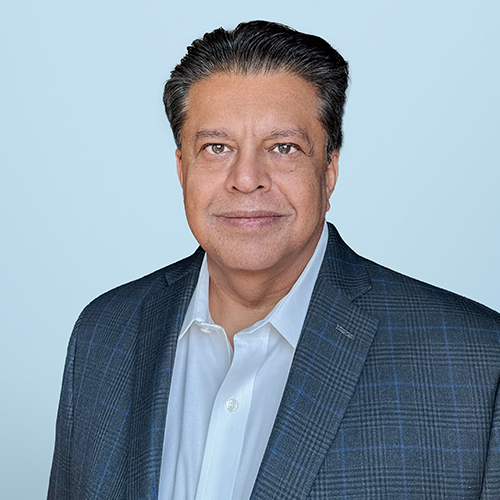
Written by
Field CTO
Kaushal is Field CTO at KMS Technology, where he applies deep healthcare and engineering expertise to guide digital transformation, scale technology teams, and turn strategic roadmaps into business value.