
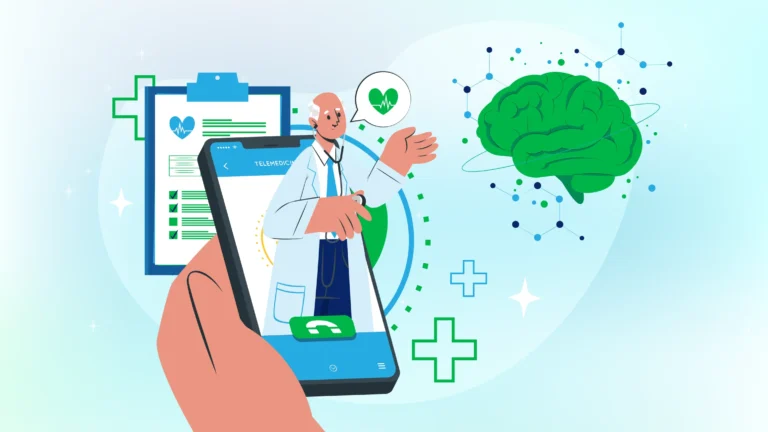
Mental health app development is expanding rapidly, driven by structural gaps in global healthcare. This growth reflects a permanent shift toward digital-first care, not a temporary trend.
$17.5B
The global mental health apps market size was estimated at USD 7.48 billion in 2024 and is projected to reach USD 17.52 billion by 2030, growing at a CAGR of 14.6%.
Source: Grand View Research
Key Takeaways
- Most mental health apps fail due to weak execution, not lack of features or ideas.
- Regulatory compliance and data privacy shape architecture decisions from day one.
- AI-driven personalization is powerful but introduces risk if not clinically validated.
- Integration with healthcare systems is harder than most teams anticipate.
- Scalability depends more on backend design than mobile experience.
- Successful apps balance clinical credibility, UX simplicity, and technical resilience.
The Mental Health App Market
Today, around 38% of Americans use telehealth for mental health, and nearly 59% are open to it, reinforcing mainstream adoption.
Despite strong demand, the market is highly fragmented. There are over 10,000 mental health apps, but only a relatively small number of these behavioral health apps have undergone rigorous evaluation in controlled trials,6,7,8 the vast majority remain largely unevaluated. This creates a gap between supply and trust.
At the same time, investment remains strong. Digital behavioral health secured $1.2 billion in 2023, with continued growth into 2026. Meanwhile, mental disorders are projected to cost $16 trillion in global economic losses by 2030.
For CTOs, this signals a clear opportunity. Success in mental health app development depends not on speed, but on building scalable, clinically credible, and integrated systems.
What are Mental Health Apps?
What are Mental Health Apps?
Mental health apps are digital applications designed to support emotional, psychological, and behavioral well-being through tracking, therapy, or intervention tools. They range from self-guided wellness apps to clinically validated platforms integrated with healthcare systems.
At a system level, these apps typically combine:
- User data collection (mood, behavior, biometrics)
- Intervention delivery (CBT exercises, meditation, coaching)
- Feedback loops (analytics, personalization engines)
The complexity increases when moving from standalone apps to integrated care ecosystems. At that point, mental health app development becomes less about UI and more about data orchestration, compliance, and interoperability.
Why are Mental Health Apps Important?
Building a mental health app is more than a market opportunity; it’s a strategic move to meet a critical, unmet need. These apps provide instant access to care, removing barriers like travel and scheduling delays. Users get help the moment they need it, whether during a high-stress episode or late at night, directly from their phones. This real-time accessibility is a game-changer for managing mental health conditions effectively.
For individuals hesitant about in-person therapy, these apps offer a private, user-controlled alternative. Secure chats and video calls allow for anonymous interaction with professionals, reducing stigma and creating a safe space for users to seek help on their own terms.
Mental health apps also drive major efficiency gains and reduce healthcare costs. By automating intake, enabling symptom tracking, and supporting asynchronous therapy, they extend the impact of every clinician. Simultaneously, users gain access to lower-cost or even free services, making mental health care more affordable and scalable than ever before.
Traditional care models cannot scale:
- Long wait times for therapists
- Limited availability in rural areas
- High cost barriers
Digital solutions change the access model entirely. They enable:
- Continuous monitoring instead of episodic care
- Early intervention instead of crisis response
- Personalized support at scale
From a systems perspective, they reduce pressure on healthcare infrastructure while improving outcomes through earlier engagement. But importance does not equal effectiveness, without:
- Clinical grounding
- Data integrity
- Ethical AI usage
Apps risk doing more harm than good.
Key Features in Mental Health Apps
Signing Up
A frictionless sign-up process is the first step to a secure and seamless user experience. Requesting basic details like name, email, and phone number enables the creation of a user profile for personalized features. The key is to balance data collection for personalization with a fierce commitment to privacy. Implementing secure authentication, such as two-factor verification or biometric login, builds immediate trust.
User Profile
After creating an account, users should be guided to build a detailed profile. This includes health-related information, existing conditions, allergies, and mental health concerns that support personalized care suggestions. Allowing users to upload relevant documents, like test results or therapist notes, further enhances the app’s utility and tailors its functionality to meet specific user needs.
Self Monitoring
Self-monitoring capabilities are the engine of user engagement. Allowing users to track mood changes, sleep patterns, and triggers provides invaluable data for their mental health journey. Daily prompts and reminders encourage consistent use without feeling intrusive. Interactive features like mood logs and visual summaries help users and therapists identify trends, set goals, and measure progress.
Appointment Scheduling
Integrated appointment scheduling bridges the gap between self-help and professional care. Users can check therapist availability, book sessions, and receive automated reminders, all within the app. This eliminates friction and reduces no-show rates, which streamlines administrative tasks for providers and saves time for both patients and clinicians.
Social Networking Features
Connecting users with supportive communities dramatically improves mental health outcomes. Social features allow users to share experiences with peers, join group therapy sessions, or receive encouragement from family and friends. These community tools foster accountability and motivation, making users feel less isolated and more supported in achieving their goals.
Audio and Video Calling
Secure, high-quality audio and video calls enable real-time support from professionals. Whether for a one-on-one therapy session or a group meeting, virtual interactions bring a necessary personal touch to the digital experience. Encrypted, reliable communication ensures privacy and caters to different user comfort levels, boosting accessibility.
AI and ML
Artificial Intelligence (A.I) and machine learning are your tools for delivering personalization at scale. These technologies can analyze user behavior, journal entries, and symptom logs to offer targeted, actionable suggestions. AI-driven insights help users identify triggers and mood cycles that are not immediately obvious. AI-powered chatbots can also provide 24/7 support in non-crisis situations, acting as a valuable first line of response.
Gamification
Gamification transforms mental health management from a chore into an engaging activity. By incorporating points, badges, and progress trackers, you can motivate users to complete exercises and stick to their routines. Daily challenges and streak counters help build positive habits over time, promoting consistent engagement with therapeutic content.
Mood Tracking Tools
Effective mood tracking allows users to record their emotional state with ease. Visual tools like emoji scales, sliders, or color-coded charts make it simple to document feelings. Adding contextual notes helps users connect their moods to specific events or triggers. Over time, this data compiles into powerful visual summaries that empower users and inform therapists.
Emergency Support Access
In high-risk moments, immediate support is non-negotiable. Your app must feature an emergency button linking users directly to crisis lines, mental health professionals, or local emergency services. One-tap access to grounding exercises and calming techniques should also be available. Embedding reliable crisis support provides users with a critical safety net.
Types of Mental Health Applications
Mental health needs are diverse, and different app categories have emerged to address specific conditions and support methods. Each type of mental health application serves a distinct user group and offers tailored features based on the nature of the mental health challenge or goal.
Anxiety, Depression & Mood Control Apps
These apps focus on managing common conditions like anxiety and depression. They leverage guided CBT, relaxation exercises, and progress tracking to improve emotional regulation. Key features include symptom assessments, video check-ins, and journaling tools to promote self-awareness and provide immediate crisis support when needed.
Addiction Recovery Apps
Built for individuals overcoming addiction, these apps support long-term habit change through personalized progress tracking, motivational messaging, and relapse prevention tools. Users set goals, like sobriety milestones, and the app provides real-time updates. Support groups and 24/7 live assistance create a powerful sense of community and accountability.
Mental Disorder Control Apps
Apps in this category assist individuals with chronic conditions like OCD, bipolar disorder, or PTSD. These tools integrate evidence-based therapies (CBT, ACT) to help users manage symptoms. Features often include anger management tools, breathing exercises, and digital journals to document triggers, providing structure and stability.
Meditation and Mindfulness Apps
Designed to reduce stress and regulate emotions, these apps offer guided meditations, breathing exercises, and calming audio tracks. They have become extremely popular for providing quick mental resets. Offerings like sleep stories and daily meditation challenges serve as an effective entry point into better mental health habits.
Self-development Apps
These apps focus on personal growth, addressing mental resilience, goal setting, and productivity. They provide educational resources, coaching content, and tools to support long-term behavioral changes. Features include habit trackers, motivational videos, and virtual coaching sessions to help users navigate work-life balance and burnout.
Multipurpose Apps
Multipurpose apps integrate a wide array of features into a single platform, offering a one-stop solution. They typically support therapist matching, messaging, audio/video consultations, and scheduling. This hybrid model allows users to access both professional care and community support, tailored to their needs and urgency.
Step-by-Step Guide to Developing a Successful Mental Health App
Developing a mental health app requires more than technical skills; it demands a thoughtful process rooted in user needs, clinical guidance, and data security. A structured development journey ensures the final product is functional, scalable, and aligned with both healthcare standards and user expectations.
Define Your Target Audience from Research
Deeply understanding your audience is the foundation of successful development. Conduct in-depth research to learn about your target users, their specific problems, and how they currently seek support. Use surveys, interviews, and focus groups. This research will shape every decision, from feature prioritization to interface design.
Build The Right Team
Assembling a multidisciplinary team is critical. Your group should include mobile developers, backend engineers, UX/UI designers, and a product manager. Crucially, you must also include mental health professionals to validate therapeutic content and a compliance specialist to navigate regulations like HIPAA. A QA engineer and cybersecurity expert will ensure the app is safe and resilient from day one.
Define Core Features
Feature selection must directly address the problems uncovered during your research. An app for anxiety should prioritize features like breathing exercises and quick therapist access. Use wireframes and user flows to map the entire journey, reduce friction, and get early user feedback on prototypes before committing to full development.
Develop The App
With features defined, the technical team begins building. Choose the right framework, native for performance or cross-platform for MVP efficiency. Use an agile methodology to release versions quickly, gather feedback, and iterate. Embed security best practices from the start to protect user data and build a foundation of trust.
Test The App
Comprehensive testing is essential. QA teams must evaluate for bugs, performance issues, and usability. Accessibility testing ensures users with disabilities can navigate the app effectively. Run simulated emergency scenarios to confirm the reliability of crisis-response features. Beta testing with real users will uncover flaws that internal teams might miss.
Planning ahead for test automation in healthtech? Our experts at KMS Technology break down how to build a long-term strategy for tech leaders in this comprehensive ebook.
Launch and Maintenance
Release is just the beginning. Long-term success depends on continuous maintenance. Your post-launch strategy must include feedback collection, frequent bug fixes, and regular feature updates based on user behavior and retention metrics. As user needs and clinical standards evolve, so must your app.
Technology of Mental Health Apps
Mental health app development relies on a combination of mobile frameworks, cloud infrastructure, AI models, and healthcare-compliant data systems. The architecture must support scalability, privacy, and real-time interaction without compromising performance.
Technology decisions directly impact compliance, latency, and long-term maintainability.
Core Technology Stack
| Layer | Technology Options | Why It Matters |
| Frontend | React Native, Flutter | Faster cross-platform delivery with consistent UX |
| Backend | Node.js, Python | Handles real-time data processing and integrations |
| Database | PostgreSQL, MongoDB | Structured vs flexible storage for health data |
| Cloud | AWS, Azure, GCP | Scalability, compliance, and uptime reliability |
| AI/ML | TensorFlow, PyTorch | Enables personalization and predictive insights |
These choices define system scalability and development velocity.
Data Security and Compliance
| Requirement | Implementation Approach | Risk if Ignored |
| HIPAA/GDPR | Encryption, access control | Legal penalties, trust loss |
| Data Encryption | AES-256, TLS | Data breaches |
| Audit Logs | Immutable logging | Compliance failure |
Security is not optional. It is foundational.
AI and Personalization Layer
| Function | Role | Challenge |
| Mood prediction | Detect emotional trends | Requires high-quality data |
| Recommendation engines | Suggest interventions | Risk of bias |
| Chatbots | Provide conversational support | Must avoid unsafe responses |
AI adds value but introduces complexity.
Integration Layer
| Integration Type | Purpose | Complexity |
| EHR systems | Clinical data sync | High due to standards like HL7/FHIR |
| Payment systems | Subscription and billing | Moderate |
| Wearables | Real-time health data | Device variability |
Integration is often underestimated and becomes a major bottleneck.
How much does it cost to develop a mental health app?
The cost to develop a mental health app ranges from $80,000 to $500,000+, but real-world total cost of ownership (TCO) is often 2–4x higher due to compliance, scaling, and post-launch operations.
Most cost estimations fail because they focus only on build cost, not system cost over time. Mental health apps are not static products—they evolve continuously with regulatory updates, AI retraining, and infrastructure scaling.
Key cost drivers include:
- Compliance implementation
- AI model development
- Integration with healthcare systems
- Security infrastructure
Cost Breakdown Framework
| Layer | Cost Range | Key Drivers | Risk Level |
| MVP Build | $80K–$150K | Core features, basic backend | Low |
| AI Layer | $50K–$200K | Data pipelines, model training | High |
| Compliance | $30K–$100K | HIPAA/GDPR, audits | Very High |
| Integrations | $20K–$100K | EHR, payments, wearables | High |
| Scaling Infra | Ongoing | Cloud, storage, monitoring | Medium |
Hidden Cost Model (What Most Teams Miss)
- Regulatory iteration cost: Laws evolve → architecture changes required
- AI maintenance cost: Model drift → retraining + validation
- Data storage growth: Longitudinal mental health data grows exponentially
- Security upgrades: Continuous threat landscape evolution
Underestimating these leads to budget overruns.
Challenges in Mental Health App Development
Creating a mental health app involves unique challenges that span business viability, user experience, compliance, and technical complexity. Understanding these hurdles early in the process enables organizations to prepare adequately and develop more sustainable, ethical, and scalable solutions.
Business Challenges
Monetization remains a significant challenge for mental health app developers. Users often expect resources to be free, making it difficult to sustain the business. Finding the right balance between accessibility and revenue is crucial. The market is also intensely competitive; differentiation through unique features or partnerships with providers is essential for gaining visibility and retaining users.
User Experience Challenges
User retention is a massive barrier. Many users abandon apps after a few uses. Driving long-term engagement requires thoughtful onboarding, intuitive navigation, and consistent motivation. Personalization is also critical, but gathering the necessary data raises privacy concerns that must be addressed with full transparency.
Regulatory Challenges
Developers must navigate a complex web of regulations like HIPAA and GDPR, which impose strict rules on data handling. Compliance requires continuous oversight. Ethical decision-making is equally vital; you must have clear protocols for identifying suicide risk and handling crisis moments to prevent patient harm and legal repercussions.
Technical Challenges
Security is a top concern. You are collecting highly sensitive data that must be protected against breaches with robust encryption and secure authentication. Integration with broader healthcare systems like EHRs is often necessary but technically complex. Finally, your app must be built for scale from the outset to avoid performance issues as your user base grows.
Mental health app development is challenging due to regulatory constraints, ethical considerations, and the complexity of delivering clinically meaningful outcomes at scale. Most failures are not technical but execution-related.
These challenges compound as the product scales.
Regulatory and Compliance Complexity
Healthcare regulations shape everything.
- Strict data privacy laws: Require encryption, access control, and audit trails, increasing development overhead.
- Certification requirements: Clinical apps may require validation, delaying launch timelines.
Data Sensitivity and Security
- Highly sensitive user data: Requires advanced security frameworks and monitoring.
- Breach risks: Even minor vulnerabilities can lead to severe legal and reputational damage.
User Retention Challenges
- Low engagement rates: Many users abandon apps after initial use.
- Behavioral dependency: Sustained engagement requires psychological design, not just UX.
Integration Barriers
- EHR system complexity: Standards like FHIR are difficult to implement correctly.
- Fragmented ecosystem: Multiple providers and systems create interoperability issues.
AI Reliability and Ethics
- Bias in algorithms: Can lead to harmful recommendations.
- Lack of explainability: Reduces trust and increases regulatory scrutiny.
The hardest part is not building the app. It is ensuring it works safely, reliably, and at scale.
Future of Mental Health App Development
The future of mental health app development will be driven by AI personalization, deeper healthcare integration, and a shift toward proactive care models. Apps will move from reactive tools to continuous mental health companions.
This shift changes both architecture and responsibility.
From apps to clinical infrastructure
Mental health app development is moving toward platform-level systems that integrate with providers, insurers, and public health frameworks. This matters because future apps must support APIs, interoperability, and clinical workflows—not operate as isolated B2C tools.
Predictive analytics and proactive care
Advanced data models will enable early detection of mental health risks before symptoms escalate. This matters because proactive intervention improves outcomes while reducing long-term healthcare costs and system strain.
AI-driven personalization with regulatory guardrails
AI will become foundational in mental health app development, powering triage, recommendations, and decision support. This matters because regulators are increasingly defining boundaries between wellness tools, clinical software, and software as a medical device—requiring explainability, validation, and risk control.
Integration with wearables and real-world data
Continuous data streams from devices will feed into mental health apps, enabling real-time monitoring and intervention. This matters because longitudinal data improves accuracy, personalization, and clinical relevance.
Hybrid care delivery models
Mental health app development will support blended experiences that combine digital tools with human clinicians. This matters because hybrid models increase engagement, trust, and clinical effectiveness compared to fully automated solutions.
Evidence and outcome-driven design
Future mental health apps will be evaluated based on clinical outcomes, not engagement metrics. This matters because regulators, payers, and enterprises are shifting toward evidence-based validation, including measurable improvements in mental health indicators.
Bring Your Mental Health App Vision to Life with KMS Technology
The mental health tech landscape is advancing fast, and building a successful app requires more than just good intentions. KMS Technology helps healthtech innovators develop scalable, secure, and user-friendly mental health apps that stand out in a crowded market and deliver real value to patients and providers alike.
- Custom-Built Mental Health Solutions: Whether you’re launching an AI-driven therapy assistant or a mood tracking platform, KMS Technology offers tailored development to match your product vision.
- Faster Time-to-Market: From MVPs to full-featured platforms, our optimized development workflows and continuous testing practices help get your mental health app to market faster, without sacrificing quality or compliance.
- Expert Development Team: Collaborate with platform-certified engineers, UX designers, and healthcare technologists who understand the unique demands of mental health apps, from HIPAA compliance to user engagement and data privacy.
Ready to build a digital mental health experience that’s clinically thoughtful and technically strong? Contact KMS Technology to bring your mental health app idea to life.
FAQ
What is mental health app development?
Mental health app development is the process of designing, building, and maintaining digital tools that support well-being, therapy, and self-care. It combines clinical guidance, user-centered design, and secure engineering to deliver safe, effective experiences.
Which core features should we prioritize?
Start with evidence-based assessments, mood and symptom tracking, CBT or mindfulness modules, crisis resources, and telehealth or messaging. Successful mental health app development also includes reminders, progress dashboards, and accessibility features like captions and high-contrast modes.
How do we protect user privacy and data?
In mental health app development, ensure the use of encryption at rest and in transit, least-privilege access, strong consent flows, and transparent data policies. Align with HIPAA/GDPR where applicable, and perform regular security audits.
How do we drive engagement and retention?
Personalize goals, nudge users with timely reminders, and keep sessions short and rewarding. In mental health app development, community features, clinician follow-ups, and streaks or badges can boost adherence\ while respecting boundaries and avoiding dark patterns.
TAGS

Written by
Field CTO
Kaushal is Field CTO at KMS Technology, where he applies deep healthcare and engineering expertise to guide digital transformation, scale technology teams, and turn strategic roadmaps into business value.